Introduction
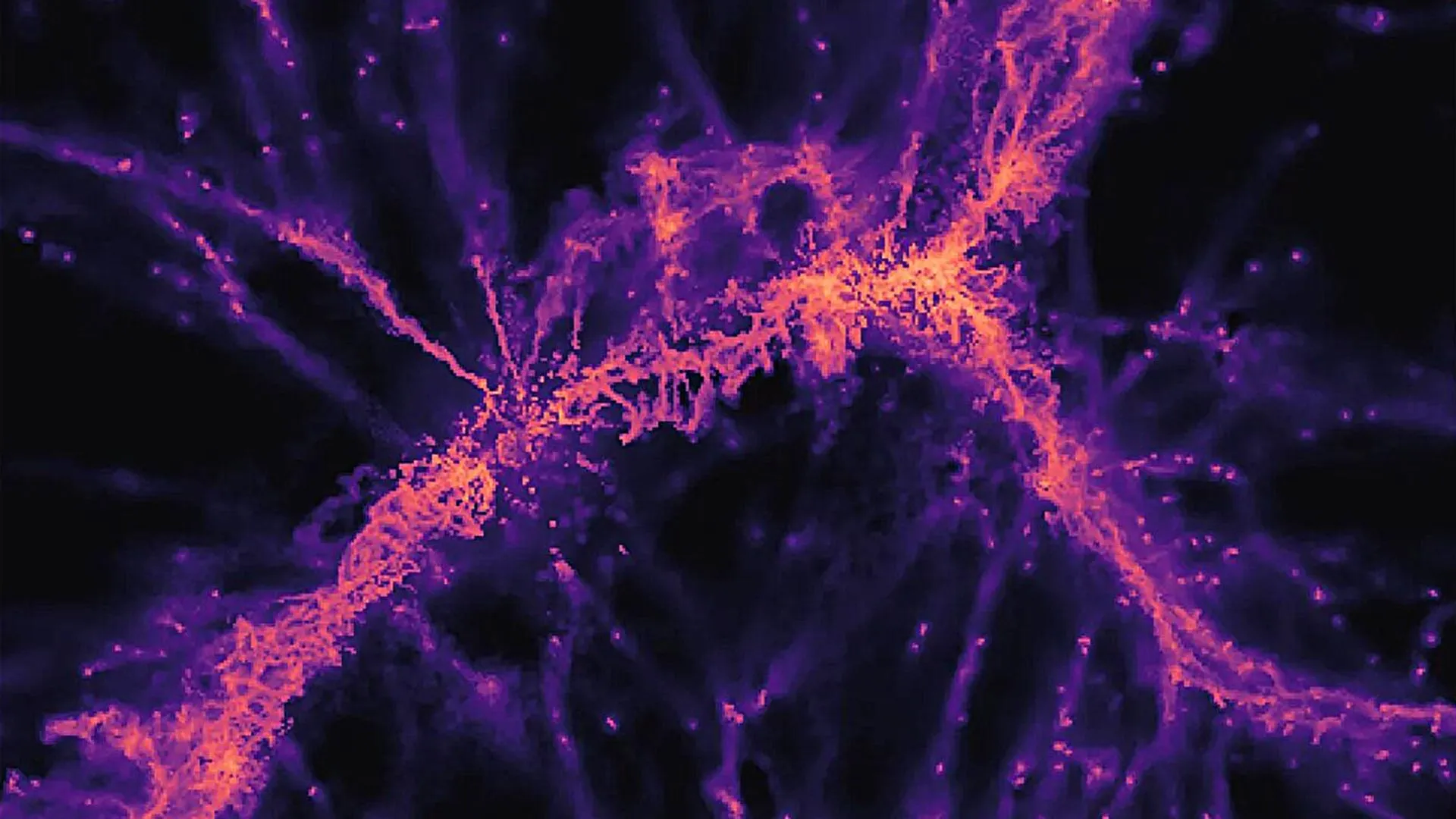
For decades, the cosmic web—the vast network of gas filaments connecting galaxies—remained hidden from direct view, known only through simulations and indirect effects. But now, astronomers have achieved a milestone: the sharpest direct image ever taken of a filament in the cosmic web, stretching 3 million light-years between two galaxies from nearly 12 billion years ago. This breakthrough reveals the faint intergalactic gas that fuels galaxy formation. In this how-to guide, we walk through the step-by-step process astronomers used to capture this extraordinary image, from targeting the right cosmic structures to processing the faint signals into a visible picture. Whether you're a budding astrophysicist or simply curious about how we see the unseen, these steps outline the technique behind one of the most impressive achievements in modern cosmology.
What You Need
- Powerful telescope array: The Atacama Large Millimeter/submillimeter Array (ALMA) in Chile, or similar observatories with high sensitivity to faint radio/millimeter emissions.
- Data from spectroscopic surveys: Previous identification of galaxy pairs and candidate filaments, such as from the Hubble Space Telescope or ground-based observatories.
- Expert team of astronomers: Specialists in extragalactic astronomy, data reduction, and image processing.
- Computational resources: High-performance computers to stack and filter long exposure data.
- Advanced image processing software: Tools like CASA (Common Astronomy Software Applications) for ALMA data, plus custom algorithms for detecting faint structures.
- Collaborative observation time: Access to time on ALMA (or equivalent) through peer-reviewed proposals.
- Scientific knowledge: Understanding of the cosmic web theory, galaxy formation, and intergalactic medium (IGM).
Step-by-Step Guide
Step 1: Identify a Promising Filament Candidate
The first step is to use existing data to locate a filament in the cosmic web. Astronomers begin by analyzing large-scale surveys that map galaxy distributions. They look for pairs of galaxies that are relatively close (within a few million light-years) and have a known high-redshift (here, about z=2.5, corresponding to 11–12 billion years ago). The key is that two galaxies connected by a filament should lie along a common line of sight, with an overdensity of gas expected in the region between them. The team focused on a specific pair of active galaxies that were already known to be linked by a filament based on earlier, less direct observations. This step requires careful cross-referencing of multiple catalogs and simulations to avoid false positives.
Step 2: Prepare the Observational Strategy
Once a target filament is selected, astronomers design an observation campaign around the capabilities of ALMA. Since the cosmic web emits primarily in the ultraviolet and X-rays, but is redshifted into the millimeter band for distant objects, ALMA is ideal. The astronomers choose a specific frequency to observe—the emission line of ionized carbon (C II) at 158 micrometers, which traces the cold, diffuse interstellar medium. They allocate enough observing time (often dozens of hours) to collect faint signals. They also plan for simultaneous imaging of the region in several spectral channels to separate the filament's glow from background noise. Coordination with other telescopes may also occur, but this step focuses on defining the ALMA parameters.
Step 3: Conduct the Observations
With ALMA's array of 66 antennas, the astronomers point the telescope at the exact coordinates between the two target galaxies. They take long-duration exposures, often over multiple nights, to accumulate photons from the exceedingly faint gas. The observations are done in interferometric mode—meaning the antennas act like a giant virtual telescope—enabling high-resolution imaging. The team monitors data quality in real-time, adjusting for atmospheric conditions (ALMA's high altitude site minimizes water vapor absorption). After the observation run, they end up with raw visibilities (interference patterns) that encode the spatial structure of the source.
Step 4: Calibrate and Reduce the Raw Data
The raw data from ALMA requires extensive calibration to remove instrumental and atmospheric effects. Using the CASA software, astronomers apply standard calibration steps: flag bad data, correct for antenna gains, and calibrate the phase and amplitude using known astronomical sources (quasars) as references. They also perform bandpass calibration to correct frequency-dependent effects. For such a faint target, they carefully subtract the continuum emission from the galaxies themselves, isolating only the line emission. This calibration step is crucial—any error here can mask the filament or create artifacts. The output is a cleaned dataset containing spectral cubes (two spatial dimensions plus frequency).
Step 5: Image Reconstruction and Filtering
From the calibrated visibilities, astronomers reconstruct images using Fourier inversion. They use CLEAN algorithm (part of CASA) to deconvolve the dirty beam and produce a clean image. But the signal-to-noise ratio is still low, so they apply additional techniques: they average over a small velocity range (around the expected redshift of the filament) to enhance the signal, and they use weighting schemes (like natural weighting) to maximize sensitivity at the expense of some resolution. They also remove bright point sources (e.g., foreground stars or interfering galaxies) to avoid overwhelming the faint extended structure. The result is a set of images at different velocity slices.
Step 6: Identify the Filament Emission
The astronomers now look for a coherent, elongated structure in the image cubes—a glow that extends linearly between the two galaxies. They examine each velocity channel to see where the emission peaks and whether it aligns with the filament hypothesis. They compare the spatial distribution with models of what a cosmic web filament should look like: a narrow bridge of gas (few hundred kiloparsecs wide) spanning millions of light-years. In this case, they found a clear, 3-million-light-year-long glow of C II emission linking the two active galaxies, confirming it's not random noise. They also perform statistical tests (e.g., checking that the structure is not a side lobe artifact).
Step 7: Measure and Analyze the Properties
With the filament image in hand, astronomers extract quantitative data: total flux, temperature (via line ratios), mass of the gas, and kinematics (velocity gradients along the filament). They calculate that the filament contains enough cold gas to fuel star formation in the galaxies. They also compare the distribution to simulations of the cosmic web at that epoch. This step involves cross-correlating with other wavelengths (e.g., no corresponding strong X-ray or optical emission confirms it's truly the faint IGM). They publish their results, providing the sharpest direct evidence of how the cosmic web feeds galaxies.
Tips for Success
- Patience and time allocation: Faint structure observations require many hours of telescope time. Apply early to highly over-subscribed observatories like ALMA and be prepared for long nights.
- Collaboration is key: Work with experts who know ALMA's quirks and have experience in extragalactic gas studies. Multi-institutional teams bring diverse skills.
- Use ancillary data: Combine ALMA results with data from Hubble or the Very Large Telescope (VLT) to confirm the redshift and exclude other sources.
- Validate with simulations: Before publishing, run your observed filament parameters through cosmological simulations to ensure your interpretation matches theoretical expectations.
- Document every step: The data reduction pipeline is complex. Keep detailed logs to reproduce results and to aid peer reviewers.
- Consider public outreach: This is a visually stunning achievement. Plan to release a processed color image and a video fly-through to engage the public and media.