Breaking: Freeze-Thaw Cycles Could Have Triggered Life's Origins
New experimental evidence reveals that freezing and thawing on early Earth may have been the key driver for primitive cell-like structures to grow and evolve. Scientists found that tiny lipid bubbles, known as protocells, behaved drastically differently depending on their membrane composition.
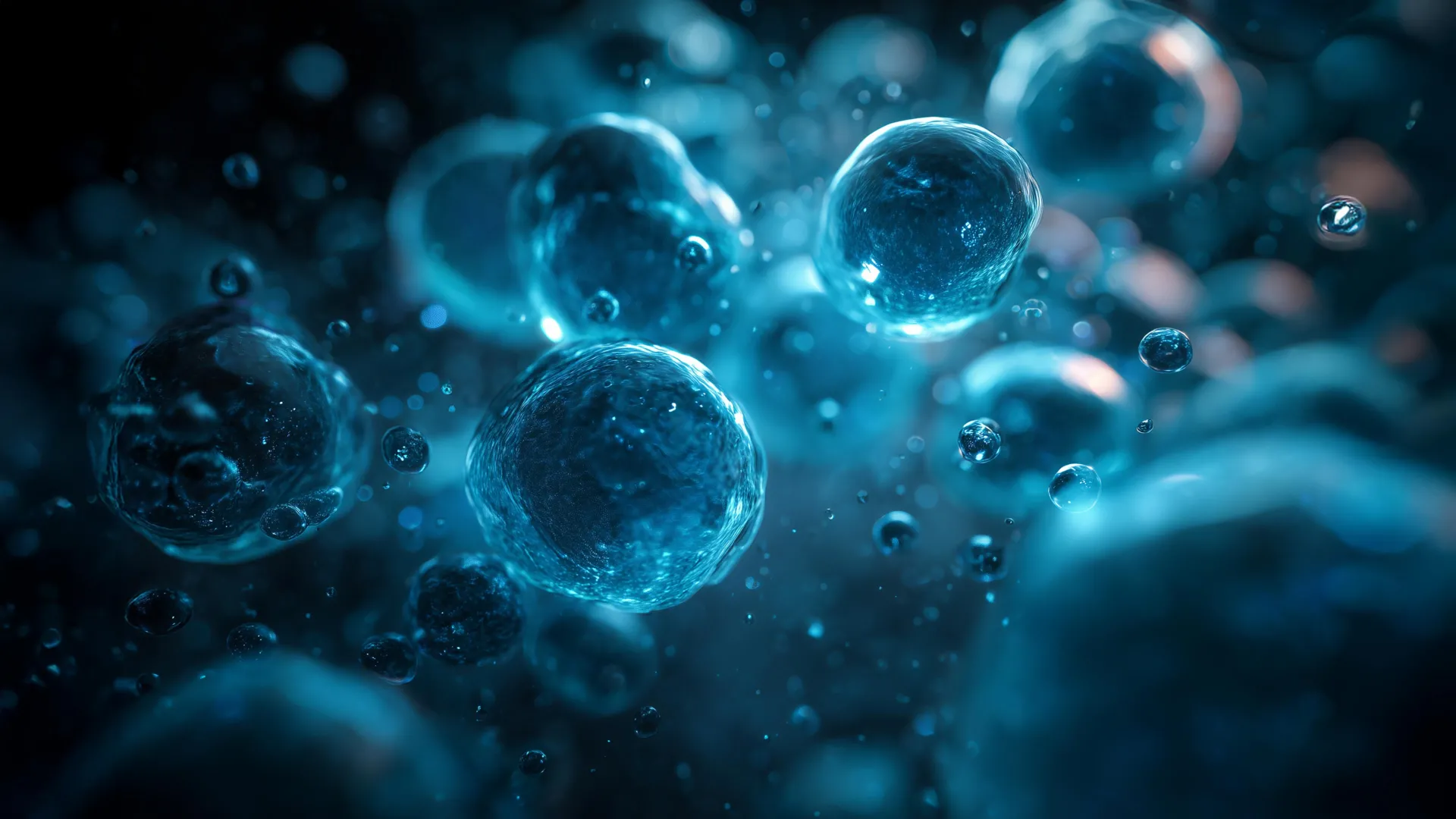
“We observed that certain lipid membranes caused the bubbles to fuse into larger compartments, which then efficiently captured DNA molecules,” said Dr. Elena Vasquez, lead astrobiologist at the University of Cambridge. “This fusion event could have concentrated and mixed key organic molecules, setting the stage for more complex chemistry.”
The study, published in Nature Geoscience, provides a plausible pathway for how non-living matter transitioned into the first self-replicating systems. The research team conducted over 500 freeze-thaw cycles with various lipid mixtures to mimic early Earth conditions.
How the Experiments Worked
Researchers created artificial protocells using simple fatty acids and phospholipids. They subjected these bubbles to repeated temperature swings between -10°C and 40°C—similar to what would have occurred in shallow ponds or tidal zones billions of years ago.
“Some membranes became more fluid when frozen, allowing bubbles to merge,” explained Dr. Vasquez. “Others remained rigid, preventing fusion. The key was finding the right balance.” The resulting larger bubbles encapsulated DNA from the surrounding solution up to 10 times more efficiently than non-fused ones.
Background: The Mystery of Life's First Cells
One of the biggest unanswered questions in science is how simple organic molecules assembled into the first living cells. The Miller-Urey experiment in 1952 showed that amino acids could form from basic gases and lightning, but linking molecules into enclosed, replicating systems proved elusive.
Previous theories focused on hydrothermal vents or clay surfaces as catalysts. This new research shifts attention to freeze-thaw cycles, which were common on the early Earth before the sun's brightness stabilized. The presence of ice would have concentrated solutes, and repeated melting would have mixed them.
What This Means
“This is a game-changer because it shows a physical mechanism—not just chemical—that could have bootstrapped life,” commented Dr. Samuel Okonkwo, a geobiologist at MIT not involved in the study. “Freeze-thaw is essentially a natural reactor that creates compartments and mixes ingredients.”
The findings suggest that life may have arisen in environments with strong seasonal or daily temperature swings, such as shallow pools on volcanic islands. It also implies that icy moons like Europa or Enceladus, where similar cycles occur, could be promising targets in the search for extraterrestrial life.
Future work will test whether such fusion events can lead to more complex behaviors, like primitive metabolism or rudimentary replication. The team plans to introduce catalytic RNA into the system to see if full protocell evolution emerges.
Implications for Synthetic Biology
Beyond origins, the mechanism offers a new tool for building synthetic cells in the laboratory. By controlling freeze-thaw parameters, scientists may be able to create protocells that can grow, divide, and exchange genetic material on demand. This could accelerate the development of artificial biological systems for drug delivery or bioremediation.
“We're not just looking backward—we're also learning how to harness these ancient processes for modern applications,” said Dr. Vasquez. The study is already generating interest from synthetic biology firms eager to develop robust cell-like containers.